There is a particular quality to habitual food choices — a low visibility that comes from repetition. The lunch ordered from the same place each Tuesday, the biscuit taken with the afternoon tea, the slightly larger portion that has come to feel like the standard one. These choices are not dramatic. They are not felt as decisions at all, most of the time. And yet their caloric weight, accumulated across weeks and months, is precisely where the relationship between everyday eating and body weight lives.
The quiet arithmetic of routine eating.
Calorie awareness is a term that has acquired a slightly burdened reputation — associated, in the public imagination, with the exhausting mathematics of tracking every gram consumed. This framing has done considerable damage to what is, at its core, a straightforward and useful concept. Knowing approximately how energy-dense your regular food choices are does not require a spreadsheet. It requires familiarity.
The nutrition literature has been reasonably consistent on this point for some time. Studies examining the dietary patterns of people who maintain a stable body weight over years — rather than those actively attempting to lose or gain — tend to find a common characteristic: an informal but fairly accurate awareness of the relative caloric density of foods they eat regularly. Not exact numbers. Not macronutrient breakdowns. A working sense of which foods are more or less energy-dense relative to their volume and satiety value.
The distinction between energy density and portion volume is worth dwelling on. A bowl of leafy salad greens with a modest portion of legumes and a boiled egg occupies a substantial volume on the plate and takes time to eat. A packet of salted crackers with a portion of cheese occupies far less physical space, is consumed more quickly, and — depending on the amounts — may carry considerably more energy. Neither choice is morally superior. But the person who understands this distinction is navigating their daily food rhythm with better information.
"Familiarity with caloric density is not the same as obsession with it. The two are frequently confused, and the confusion is costly."
How habits obscure caloric accumulation.
The mechanism by which habitual eating patterns can gradually shift body weight is not mysterious, but it is easily overlooked because the changes are slow. A daily caloric surplus of 150 to 200 kilocalories — roughly equivalent to a modest increase in portion size at one meal, or the addition of a mid-morning snack that was not previously part of the day — will, over twelve months, produce a measurable change in body composition if not offset by corresponding changes in activity or other meals.
What makes this difficult to perceive is the same feature that makes habits efficient: they run below conscious awareness. The gradual enlargement of a portion over months is not noticed because there is no single moment at which the change is dramatic. The addition of a snack that becomes embedded in the afternoon routine stops feeling like a choice and starts feeling like a necessity. The energy it contributes is real regardless of whether it feels like a decision.
Research on dietary recall — the standard tool used in nutritional epidemiology to understand what people actually eat — consistently finds that self-reported energy intake tends to underestimate actual consumption, often by a substantial margin. This is not usually deliberate misreporting. It reflects the genuine difficulty of tracking habitual behaviour that has become automatic. The foods we eat most often are precisely the ones we are least likely to notice eating.
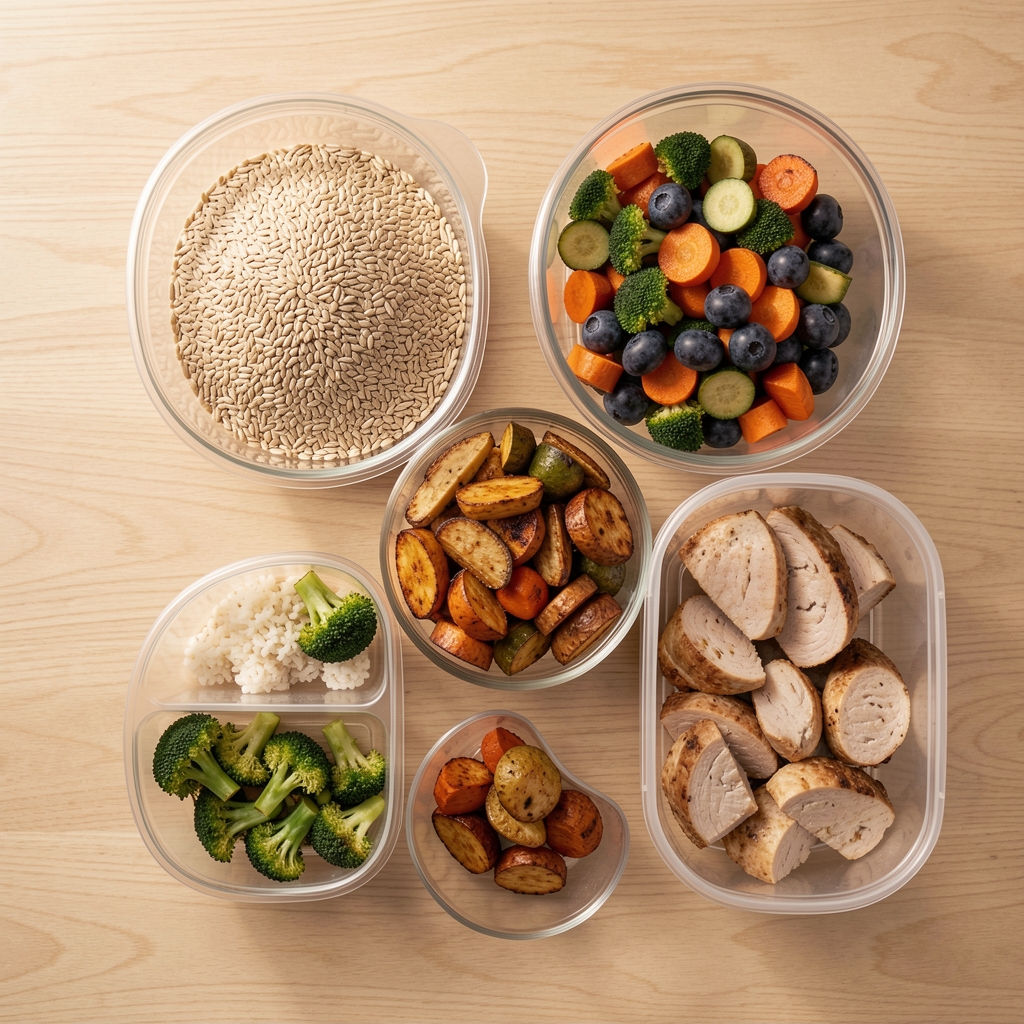
Structured meal preparation as a form of portion perspective — London, January 2026.
The role of food quality within caloric context.
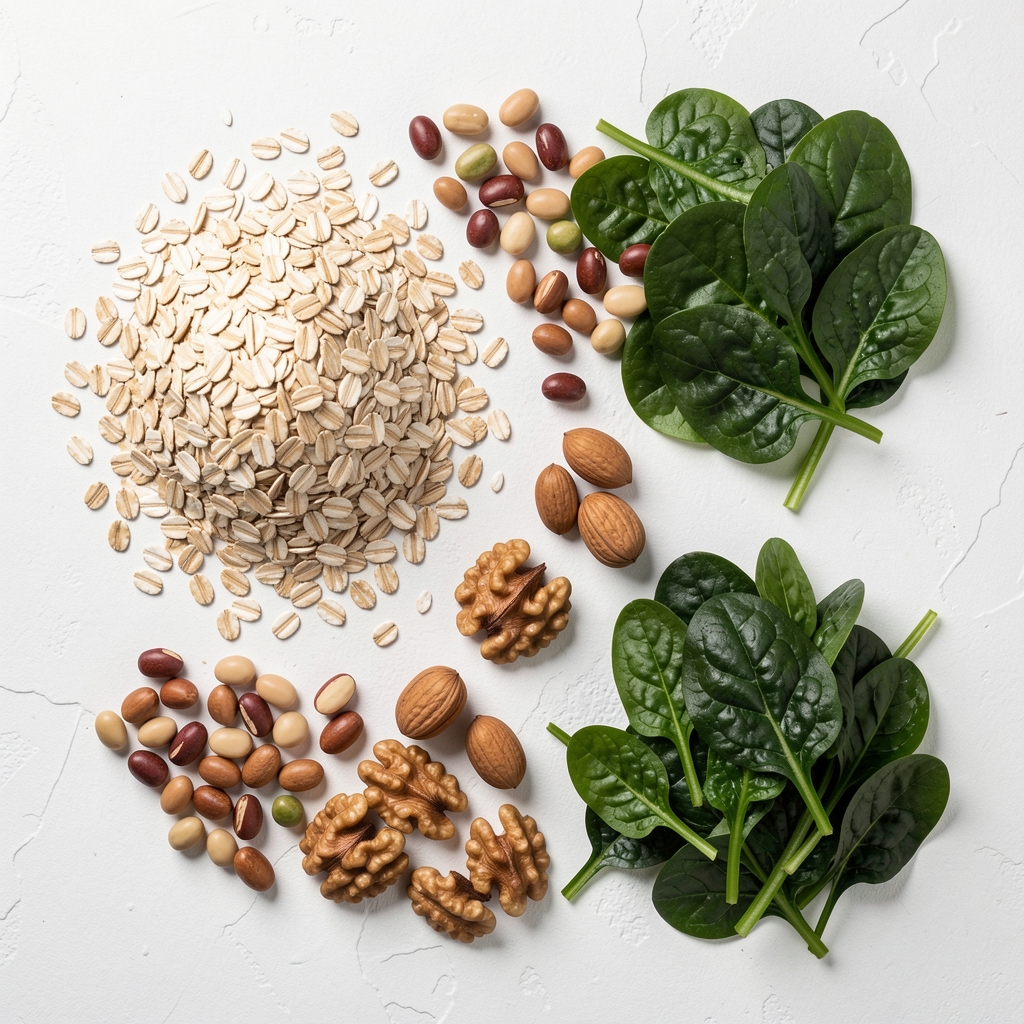
The relationship between food quality and calorie awareness is more intimate than is sometimes acknowledged. Foods that are high in fibre, protein, and water content — whole grains, legumes, vegetables, eggs, plain dairy — tend to produce a satiety signal that is proportionate to their caloric content. A meal built substantially from these foods creates a sensation of fullness that persists, and that moderates the desire to eat again in the short term.
Highly processed foods, by contrast, often deliver a high caloric load without the accompanying physical bulk or the fibre and protein that signal satiety to the brain. This is not coincidence — many processed foods are designed, at least in part, around palatability characteristics that encourage continued consumption. The satiety signal arrives late, if it arrives adequately at all, and by that point a considerable amount of energy has already been consumed.
From a practical standpoint, this means that calorie awareness and food quality are not two separate tools for managing weight — they are complementary aspects of the same understanding. A food environment built primarily around whole food choices tends to self-regulate energy intake more naturally than one built around processed alternatives, because the satiety mechanics work more reliably. The person who pays attention to food quality is, in effect, making calorie awareness easier without necessarily engaging with it directly.
Awareness without anxiety: a working distinction.
One of the more persistent obstacles in discussions of calorie awareness is the conflation of knowledge with preoccupation. The concern — a legitimate one, and worth acknowledging — is that encouraging people to pay attention to the energy content of food may contribute to an unhealthy relationship with eating. This concern is most acute in populations that are already prone to excessive dietary restriction or that have a history of disordered eating patterns.
The distinction that the published literature tends to draw is between two different orientations toward caloric information. The first is flexible awareness — a background understanding that shapes food choices without dominating them, that allows for variation and social eating, and that does not produce distress when meals deviate from a routine. The second is rigid tracking — a system of precise monitoring that becomes aversive, that induces anxiety in ambiguous food situations, and that may ultimately undermine the relaxed relationship with eating that tends to support long-term weight stability.
The evidence supports flexible awareness as a component of sustainable eating patterns. It does not support the view that detailed caloric tracking is necessary for most people, or that it produces better long-term outcomes than a simpler, food-quality-focused approach. The message, stated plainly: knowing roughly how energy-dense your regular choices are is useful. Becoming preoccupied with exact figures is not.
Portion perspective as a practical skill.
Portion perspective — the ability to estimate, without precision instruments, roughly how much food is on a plate relative to what the body is likely to need — is a skill that can be developed over time through attention rather than measurement. It draws on familiarity with how different foods look in different volumes, and on an awareness of how full different meals tend to leave the body feeling an hour after eating.
The practical utility of this skill is that it operates in environments where formal tracking is impossible or inappropriate — at a restaurant, at a social gathering, when travelling. A person who has developed reasonable portion perspective does not need to weigh their food to make broadly sensible choices. They carry the relevant knowledge with them in the form of internalized reference points built through attentive eating over time.
Key observations from this piece.
- Habitual food choices are the primary site where everyday eating and long-term weight intersect, precisely because they are invisible as decisions.
- Calorie awareness as flexible background knowledge is a different practice from rigid daily tracking — and the evidence supports the former rather than the latter.
- Whole food choices tend to support satiety mechanics that make calorie awareness easier to maintain without direct attention to numbers.
- Portion perspective is a learnable skill, built through attentive eating over time, not through measurement protocols.